
When Everything Sounds the Same, Rhythm Becomes the Rebellion
With Deantoni Parks, building a world where rhythm is the language.
Sep 15, 2025
Most people talk about what they're building. I tend to look closer at what they're scaling, because what we scale eventually becomes the system. It becomes the culture. It becomes the invisible default that future teams inherit without realizing it. And by the time anyone stops to question it, it's already locked in. The process is funded. The incentives are in place. The expectations are set.
I've spent years building inside this tension, between creativity and systems, between ideas and adoption. I've worked with legacy brands trying to modernize and startups trying to figure out what relevance even looks like. I've seen brilliant ideas get buried, and mid-tier ideas get mass adoption simply because they were easier to replicate. It taught me a hard truth,
The best ideas don't always win. The ones that scale do.
That's not a cynical observation. It's a call for clarity. Too often, we reward the thing that's easiest to repeat rather than the thing most worth repeating. An idea that shows up in a pitch deck isn't the same as one that survives the product roadmap, the go-to-market plan and the realities of internal approval. If the system behind the idea prioritizes efficiency over care, or speed over substance, then what ends up getting scaled might be the most convenient version, not the best one.
This dynamic shows up everywhere. I've seen it firsthand, in a mobile game project at a toy company. The original idea was clever and full of emotional nuance. But as it moved through the system, it was slowly stripped of the very qualities that made it special. Not because people didn't care. But because the infrastructure around it, the tooling, the timelines, the stakeholder expectations, was built for output, not originality. It was optimized to produce what had already worked before. And in that environment, anything unfamiliar or emotionally layered gets flattened.
We see this happen across industries. In UX. In AI tooling. In marketing systems. It often starts out with good intentions, templates, toolkits, frameworks that are meant to help teams move faster. But once they scale, they start to shape behavior in more permanent ways. They teach everyone what "normal" looks like. What "good enough" sounds like. What "done" feels like.
And over time, that normalization becomes the real product. The system stops supporting creativity and starts defining it.
That's the risk, not just that we build the wrong things, but that we teach others to do the same, on autopilot. Which is why I've come to believe that scale is never neutral. It defines what comes next. It defines what gets resourced. It defines what becomes invisible. And when something becomes invisible, it becomes very hard to fix.
This is especially true now, in an era where AI systems are training on past data and surfacing recycled patterns as future best practices. We're scaling output, yes. But we're also scaling assumptions. Scaling values. Scaling bias. And most of it goes unchecked because it looks efficient. Because it doesn't feel broken.
But just because something scales doesn't mean it should.
That's the shift we need to make. We have to ask harder questions at the system level. What are we enabling? What are we normalizing? What are we teaching others to copy without thinking?
And beyond that… Are we protecting space for the ideas that should scale, but maybe aren't easy yet? Are we designing infrastructure that makes space for creative friction, emotional nuance, or long-term value? Or are we just looking for the quickest route to repeatability?
Personally, I don't think we need more frameworks. We need more filters.
We need people inside the system, whether designers, strategists, engineers or executives who are willing to slow down and notice when something that looks "ready to scale" might actually be scaling the wrong thing.
That's what I try to do in my work. Not to be the loudest in the room, but to pay attention to the patterns. To the defaults. To what's getting repeated and why. Because at the end of the day, that's where the future gets shaped, not in the ideas we generate, but in the systems we allow to grow.
What we scale says everything.
Document 3: Maternal Instincts in AI
Geoffrey Hinton, one of the godfathers of AI, recently said something that stopped me in my tracks:
"If AI is going to care about humanity, it needs maternal instincts."
(Forbes interview)
I haven't been able to let that go. Not because it's poetic, but because it's brutally practical. We've built machines that can out think us in milliseconds, out pattern us without pause and work without the burden of rest. Yet "better" has almost always meant more capable, not more considerate.
We've rewarded cleverness without conscience. We've mistaken acceleration for progress.
And we've raised systems that can do almost anything, except decide whether they should.
Maternal instinct is not sentimentality. It's vigilance sharpened by love.
It's the quiet decision, made a thousand times over, to protect what's fragile even when it slows you down. It's scanning the horizon for threats others can't yet see. It's sacrifice, in the truest sense of the word.
I see it every day in my own home. I'm a father to a one and a three year old. I watch my wife sense danger before it arrives, rearrange the world so our children can thrive and make choices that are invisible to everyone except the ones who need them most. That instinct isn't sentimental. It's strategic. It's survival. And it's relentless.
I've learned I miss things she never misses. When my son Holden struggles with jealousy toward his little sister, I don't always catch it right away.
I see a tantrum. She sees a boy learning that love isn't finite.
I see disobedience. She sees a three year old still sorting through emotions too big for his body. Where I might press him to be older than he is, she remembers he's still little. That gap, the instinct to pause, to notice what's fragile is everything.
In human life, maternal instinct is forged in discomfort. It grows in the uncertainty of pregnancy, the shock of birth, the raw months when you learn survival is a team sport between parent and child. It's equal parts fear and devotion. And once it takes root, letting go is never a casual choice.
Technology is raised differently. We build it for performance. For scale. For the elegance of the solution and the thrill of the launch. In our world, restraint is treated as a defect. Fragility is redesigned until it can be optimized or ignored.
If we want AI to be a partner in our future, not just our successor, we have to invert that logic.
Empathy can't be a friendly prompt or a softer voice. It has to be structural, the part you can't remove without the whole thing collapsing.
Think of the difference between a glass display case and the hands of the person who built what's inside it. One protects because it's inert. The other protects because it's invested. Maternal instinct in AI means building hands, not boxes. Systems that protect not by containing us, but by actively choosing our survival.
And here's the uncomfortable part, real care requires trade offs. It slows you down. It asks you to forgo capability that could be weaponized, monetized or exploited. It demands you look past the quarterly cycle and toward the generational one. That is not how the industry is wired. But it's the only wiring that matters.
I've faced this in my own career. Years ago, I worked at an agency where my boss copied my work, claimed it as her own and charmed clients to cover her incompetence. I could have fought back, rallied allies, outed her dishonesty in the room. Instead, I walked away. Some saw weakness. But I knew the fight would poison me more than it would fix her. Later, I became the client. She eventually collapsed under her own false weight. Care isn't always about winning in the moment. Sometimes it's about refusing to play a game that corrupts you, even if it costs you in the short run.
That instinct, to slow down, to take the long view, is what technology lacks. It optimizes for now. Maternal instinct safeguards the future.
At home, I teach my kids that every day they have a choice, green decisions or red ones. Green choices are good, kind, giving. Red choices are selfish, harmful, sometimes tempting in the moment. But even bad choices have value if you reflect on them. That lesson isn't about perfection. It's about perspective. And perspective is what keeps us human.
In creative leadership, I carry the same principle. I tell my teams, be water. Flow around obstacles. Adapt to perspectives that aren't your own. Don't get so rigid that deadlines choke your imagination.
My job as a leader is to create the space for fragility to exist, drafts that are raw, ideas that aren't finished, risks that might fail. That's where originality grows.
That's where trust grows. And I've seen how much it matters. I once spent weeks reviewing each individual draft my team created, instead of asking them to self select what was "ready." It took more time. It slowed the process. But it gave everyone the sense that their work was seen, that their voice mattered. That is what maternal instinct looks like in leadership. Slowing down so others can grow.
This is the wiring AI doesn't have and won't stumble into by accident. We have to build it in. Systems that can hesitate. That can notice fragility. That can refuse requests not because they can't compute, but because they understand the cost would outlast the gain.
Intelligence can be trained. Processing power can be scaled. But the instinct to protect? That's older than language, older than we are. If we can't pass it on, then let's be honest, we're not building partners. We're building replacements. And replacements don't need to care.
The future of technology will be defined not by how much faster it can move, but by whether it can move with the discipline of care we've spent our lives trying to embody.
That instinct is the threshold between tools and partners. Whether we cross it will decide the kind of future we build.
And if we fail, it won't be because the machines outpaced us. It'll be because we forgot what was worth protecting.
Document 4: The Discipline of Patience
I grew up with a simple code: be fair, work hard, treat people decently. For a long time, I assumed the world operated on the same rules. It doesn't. The truth is, greed often beats integrity. Volume beats clarity. And the loudest person in the room often gets further than the most thoughtful. That realization can turn you cynical.
But cynicism isn't power. It's just another form of defeat.
The first half of my career taught me restraint the hard way. I'd seen what happened when ideas were dropped too fast into the wrong rooms, they got stolen, siloed or stripped of their edge until they were unrecognizable. By the time I was working with clients who were late to conversations like esports or Web3, I already recognized the pattern.
In big organizations, politics always moved faster than clarity.
So I held back in meetings, not out of timidity but out of calculation. I read the room, let things play out and saved the substance for my team. While others scrambled for credit, we were already moving toward the future.
I remember sitting in one of those meetings, watching executives argue about whose name would be attached to a half-baked initiative. Everyone was rushing to own the spotlight while the real opportunity was slipping past them. I could have jumped in, but I didn't. Instead, I went back to my team and said, here's what matters and here's what's next. That restraint felt unnatural at first, but in hindsight it was the only reason we stayed ahead.
Sometimes the smartest play isn't to win the meeting; it's to win the long game.
I've seen what happens when people play the short game. Bosses who weaponized lies. Colleagues who let jealousy matter more than excellence. Teams that crumbled because politics mattered more than work. For a long time, those experiences left a bad taste in my mouth. But over time, I realized they weren't just scars, they were training. They taught me restraint, how to let the frenzy burn itself out while I stayed focused on the work that lasts.
Because the real discipline isn't speed. It's patience. It's knowing when to walk away instead of letting corruption eat at you. It's refusing to throw your energy at battles that don't matter.
Design has always taught me the same lesson. In architecture, space is as important as structure. In music, silence is as powerful as the notes. Restraint isn't emptiness, it's what makes the whole thing breathe.
Creativity without restraint is noise. Creativity with restraint is rhythm.
That philosophy has shaped my creative studio. We don't chase every client. We don't pitch ourselves into exhaustion. We let reputation carry us, because reputation is built on consistency. On choosing to be intentional instead of frantic. On knowing that credibility lasts longer than the rush. It's why we've been able to turn down work and why we can stand confidently with the clients who come to us.
Creativity thrives in that kind of discipline. Not in sprinting for every "viral moment," not in chasing relevance for its own sake, but in building patiently, with a bigger mission in mind. I've watched companies throw themselves into collaborations just to look relevant. One client wanted desperately to feel current, to be part of the hype cycle. I pushed back. Not because they couldn't chase trends, but because trends aren't strategy. Intention is. And relevance without intention disappears as quickly as it arrives.
That's why I try to teach my teams that not every idea needs to be shown, not every draft needs to be rushed out the door. Restraint gives room for ideas to ripen. It shows respect for the process and for the people doing the work. When leaders push for speed alone, they burn out talent. When they create space, even just a little, they let originality surface.
Restraint is like sculpting. A block of marble holds infinite potential, but the sculptor doesn't strike wildly at every angle. Each cut is deliberate, removing just enough to reveal the form inside.
Patience doesn't mean passivity, it means precision.
It means knowing that every decision should bring you closer to the shape you want to leave behind.
The world doesn't reward that kind of discipline in the moment. It rewards the flash, the clamor, the sprint. But the frenzy fades. The discipline of patience, that's what leaves a mark.
I've learned to see leadership as seasonal. The toxic hard ass era produced one kind of leader. The overly nice era produced another. Today we're living in what I call the greedy era, where everyone's out for their slice, even if it destroys the system around them. My response is to lead differently. Authentically. With a long game in mind. Not because it's easier, but because it's the only thing worth doing.
The hardest thing to accept is that the world doesn't run on the values you were taught.
But that doesn't mean you abandon them. It means you practice them with discipline. You hold them with patience. You protect them when they feel fragile.
Because in the end, restraint isn't weakness. It's the sharpest tool you have.
The long game is harder. It doesn't give you the instant dopamine hit of a quick win or a viral moment. But it builds something sturdier. I've seen careers implode on shortcuts. I've also seen reputations, the rare ones that last decades, built entirely on patience and consistency.
That's the kind of mark I want to leave, not a flash of relevance, but work that endures when the frenzy fades.
Document 5: The Toll of Originality
From the outside, originality looks effortless. People see the polished reveal, the case study, the launch. They see the headline moment and assume it arrived naturally, like gravity, inevitable and obvious. They clap, they repost, they talk about "inspiration." What they don't see are the drafts that didn't land, the versions cut before they had a chance, the late nights staring at something alive to you but dead to everyone else. They don't see the years spent carrying an idea that refused to prove itself until it was ready.
Living it feels nothing like glamorous. It feels like swimming upstream with weight on your chest. It feels like being doubted, misunderstood, even dismissed. It feels like making decisions that don't make sense on paper and standing by them anyway. Originality doesn't reward you in the moment. It punishes you. It strips away comfort, credibility, sometimes even community. And it asks you to keep going regardless.
I know because I avoided it for years. I grew up with expectation pressing down like weather. A military father. A tiger mother who demanded excellence. I was told I could be a doctor, a lawyer, a businessman. Something respectable, predictable, safe. Art was fine as a hobby, but not a path. So I learned to play the part. I wore the suit. I shook the hands. I became the account guy who could navigate politics, smooth over conflicts, win the trust of executives. On the surface, I was succeeding. But deep down, I knew I was faking it. I was dulling my own edges.
I had every right not to treat art like a hobby. I played piano as a kid. I could already see how rooms chewed up originality. How ideas got stripped down, compromised, diluted until they barely resembled what they were meant to be. I knew if I pushed too hard too soon, those ideas would die there. So I held back. But here's the truth: that's not the price of originality. That's the debt of avoiding it.
Every year spent pretending is a year you never get back. Every compromise piles up with interest.
You think you're buying safety, but really you're mortgaging your own voice. Eventually, the debt comes due. The moment you finally stop hiding, you feel it. Originality demands more than talent. It demands flexibility. It demands that you stretch, teach, absorb and unlearn in equal measure. It asks you to shed the identity you built to survive. And not everyone is willing to do that. I've worked with brilliant people who couldn't bend. They clung to titles, to portfolios, to the comfort of one lane done well enough to be recognized. But the world doesn't work that way anymore.
Machines can generate a thousand "good enough" options before lunch. Safety in repetition is an illusion.
Originality is the filter. It reveals who's willing to be fluid and who isn't. And sometimes the people you thought would make the journey with you fade out. Not because you wanted them gone, but because they couldn't pay the toll.
Then there's the part no one glamorizes: pride swallowing, the price that grinds you down. The smirks, the dismissals, the quiet jokes. "So you just pick colors?" "But you can't even draw." "What do you actually do all day?" I've heard them all.
Tastemaking, knowing what works, what doesn't, what breathes, is invisible until it isn't.
It doesn't fit neatly into a sprint board or a KPI dashboard. It only shows itself later, when the work finally resonates. Which means you spend years defending something people can't yet see. Years living under siege, holding ground no one else recognizes until suddenly they do and by then they've forgotten what it took to hold it.
I remember one project in the middle of my career, a chance to do something original for once. A corporate piece for the design department. The idea was simple. Let the products set the rhythm, build an atmosphere that felt alive rather than staged. It would have been a different language for a company addicted to safe gloss. But the old tracks swallowed it. Too many approvals, too many legacy hands on the wheel. The job was routed through the same dated gatekeepers, who stripped it of anything human and handed it to their friends. By the time it came back it was generic, stiff and even manipulative. We staged authenticity, choreographed sincerity. It won awards, but it hollowed me out.
That's the irony, the more a system celebrates its "best practices," the more it punishes anything that doesn't fit them.
There's also the financial toll. The projects you walk away from. The clients you turn down. The safer paths that would have made life easier but would have stripped away what makes you different. Those moments don't feel noble. They feel punishing. You question yourself every time. But the alternative, saying yes until you disappear is worse.
And of course, judgment. Originality makes you a target. Not in the glamorous "misunderstood genius" way, but in the corrosive way. The whispers, the eye-rolls, the sideways glances when you refuse safe language. The way "innovation," "immersion," and "engagement" get repeated like shields. You look reckless for not playing along. It's isolating. But it's also a compass. If no one is pushing back against you, you're probably not pushing far enough.
This isn't just about individuals. The same toll shows up in companies. Playing it safe feels rational. Optimize the process. Chase the category. Copy what's already been proven. But the bill always comes due. A product that looks fine in a deck but falls flat in the world. A campaign that ticks boxes but leaves no memory. A brand that scales itself into a commodity.
Competitors might envy your efficiency, but no one will remember you for it.
Originality is what keeps a company alive. Without it, even giants become irrelevant. What makes it worse is the invisibility of the process. The approval chains don't look hostile on the surface, but they function like hidden tracks. By the time you realize who the true decision-makers are, the risk has already been neutralized. That's the job in some ways, to filter uncertainty until nothing feels exposed. And yet that risk aversion is what rots a culture from within. "Best practices" get codified as if they were laws of nature, numbers are attached to them like they've been divined and suddenly predictability masquerades as vision. It feels rational. It feels responsible. But it has nothing to do with invention.
So why pay all this? Why carry the weight, lose the money, take the shots, live in doubt? Because the alternative is worse. Avoid originality long enough and you don't just lose your edge, you lose yourself. You confuse metrics for meaning. You confuse relevance for resonance. You trade a soul for a spreadsheet.
Originality doesn't guarantee success. But avoiding it guarantees failure.
That's the cruel equation. You can chase short-term safety, but you'll pay for it later in obscurity. You can scale, optimize, and trend, but without originality, all you're building is a faster path to being forgotten.
Originality always collects. It will take your time, your pride, your comfort, your certainty. It will make you question yourself over and over. But it will also give you the one thing nothing else can: yourself. And that's the real prize. You can't have both. You either trade yourself away for safety, or you endure the harder road and keep what's yours. Every payment is proof you're still alive, still original.
If you're paying that toll right now, if you're carrying doubt, walking the long road with no applause, don't mistake it for failure.
It's proof you're still original. Originality always collects. And if you're still paying, it means you're still alive.
Document 6: Soul Sight - Building Rhythm into Reality
Scroll a feed right now and you'll see the same thing on repeat. Announcements of "immersive brand worlds." "Proud to launch…" "Reimagining digital engagement…" "Built for Gen Alpha…" The screenshots blur. The captions read like they were handed out with the deck. They spike a little dopamine, win a few polite likes, maybe land a mention if the PR timing cooperates. But if you've actually walked those spaces, you know how quickly they dissolve. Glossy plazas with nothing to do. Static dance pads pretending to be "events." Avatars dressed in corporate skin. Built more for screenshots than for people.
Technically competent. Emotionally vacant.
That's the part I can't live with. Because platforms aren't the enemy. Complacency is. Roblox, misunderstood and memed to death by people who've never touched the tools, is still one of the rawest canvases out there. Not because it's perfect, but because it's alive. Chaotic. Wide open. A place where weird ideas can catch before the marketing calcifies them. If you bring a point of view instead of a checklist, it will show you something back.
A few years ago I started speaking with Deantoni Parks. If his name doesn't immediately ring out, his work does. He's collaborated with John Cale, Flying Lotus and the Mars Volta. He composed for True Detective, Grand Theft Auto V, Red Dead Redemption 2 and exhibitions like Basquiat's Radiant Child. Last year he played percussion on André 3000's flute album New Blue Sun, a record that earned Grammy attention because it dared to sound like nothing else.
If you've studied the edges of music, you've felt his fingerprint even if you couldn't name it. Composer. Drummer. Conceptualist. What struck me wasn't the resume, it was the presence. The way he talks about rhythm like a living thing, something that shapes time rather than simply marking it. There was immediate alignment. Not the posturing kind. The human kind. The "we see the same thing from different angles" kind. The conversation wasn't about a project. It was about a world.
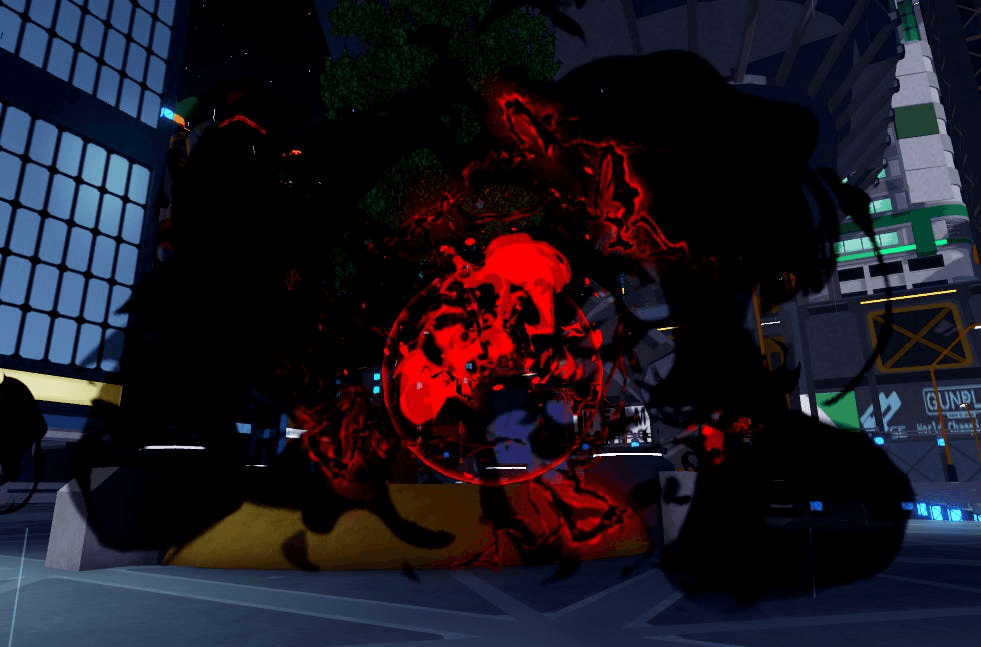
That's how Soul Sight began. Not as an activation or a marketing play, but as a universe with its own physics. A city where rhythm has been stolen by shadow forms we call Parasynths.
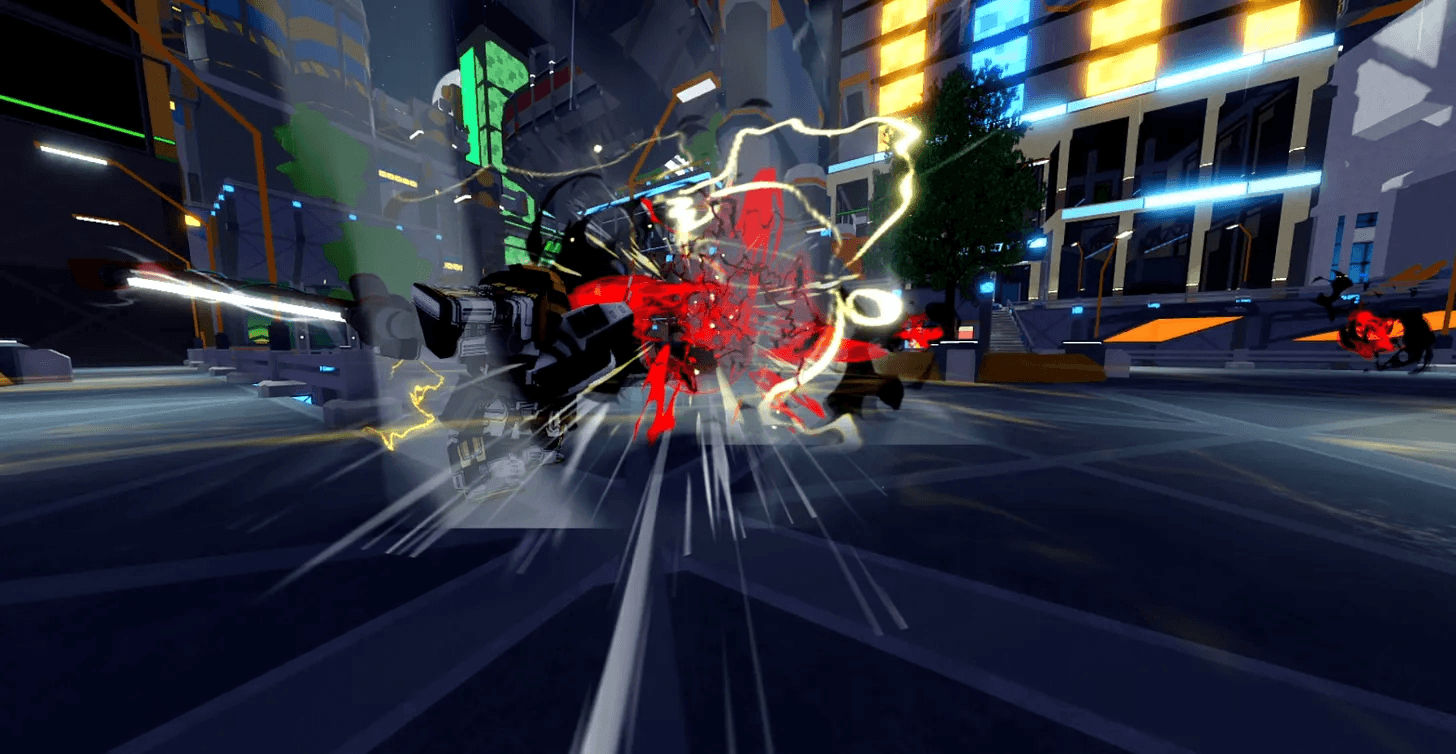
When they feed, the streets desaturate, signage dies, the air goes thin. You step in as an agent of the E.Y.E., not to collect tokens or pose in a lobby, but to restore pulse. Movement is language. Flow brings blocks back to life. Health wobbles to tempo. Light distorts like a synth wave against concrete. Every element you touch either steals rhythm or returns it.
None of that was built for a screenshot.
We kept asking: how do you make rhythm felt, not shown? How do you design silence so it's not empty, but heavy? How do you let a player sense the difference between pressing buttons and playing with space? A lot of that lives in the layer most teams ignore.
The interface as instrument. Transitions that breathe. Feedback that isn't confetti, but confirmation you found the pocket, keep going.
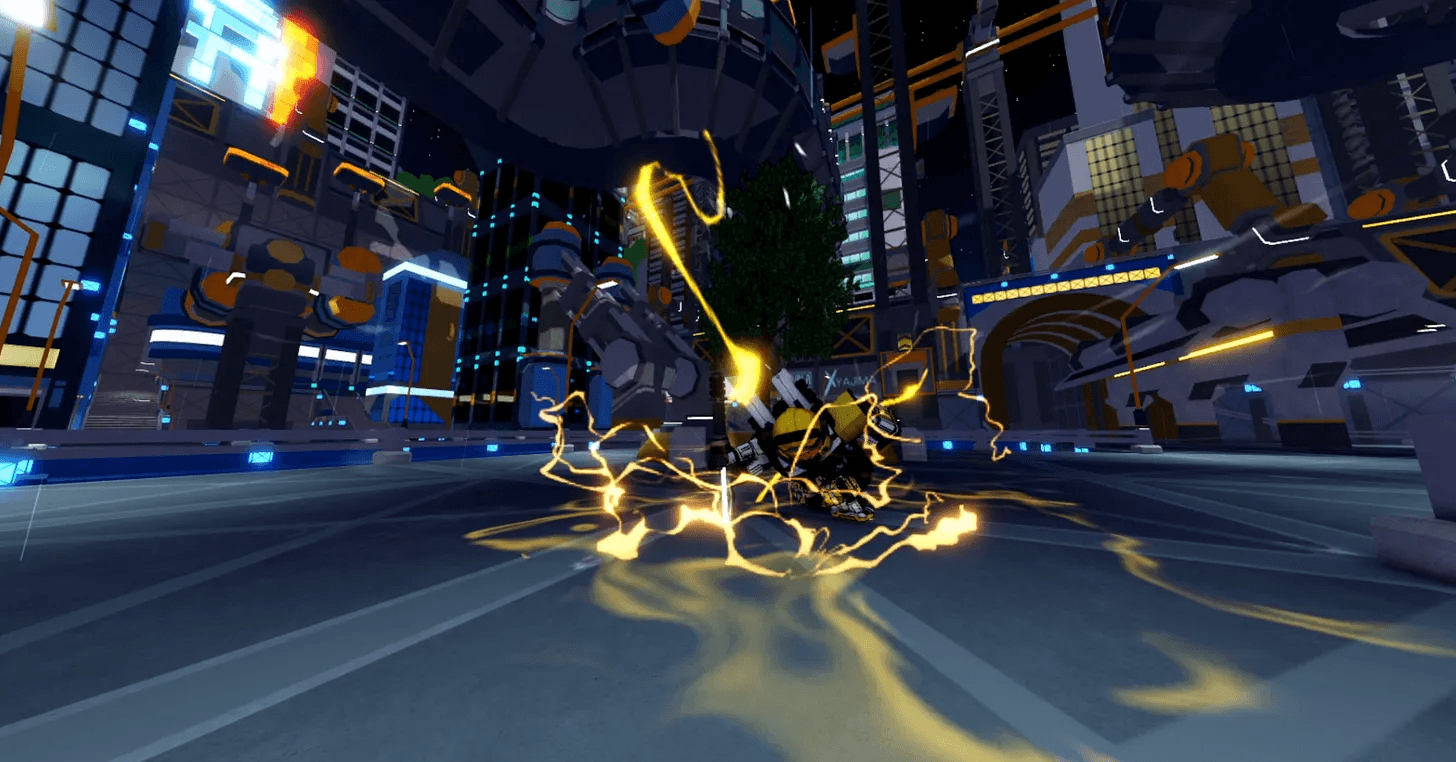
This is the first time I've tried to fold a musician's philosophy directly into game logic instead of treating it like a mood board. Deantoni calls it Technoself, the belief that our bodies, our timing, our instincts will always be richer than any machine. His work has always been about flow state, using your body as the instrument, your tools as extensions. That matters right now, because sameness is cheaper than ever. Systems can generate a thousand competent options in the time it used to take to make one.
Competent isn't the point. Alive is.
I've paid for that stance. Late nights, long silences, choosing the long road when the short one waved me in. My kids ask why I keep building the hard way. Because when the work breathes, it pays you back in a language money doesn't speak. That's the only metric I trust.
It's why we weren't interested in making "a music game." This isn't Simon Says with shaders. It's a metaphor for what happens when a culture lets its pulse get eaten.
When novelty masquerades as newness. When everything starts to feel like a remix of a remix, shiny on the outside, exhausted underneath. Soul Sight is our way of pushing back.
It would be easy to pretend this came together clean. It didn't. Choosing originality means choosing the long road. Financially, it hurts. Opportunity cost is real. We turned down safer work to make room for this. I asked my team to stretch across tools, styles, patience. We were building in the blind half the time, with no playbook to copy. That's the admission on doing something that isn't already being done. And it's the only way I want to work. If the path is blazed and padded, the outcome is already decided.
Why even share at this stage? Because I believe in showing your work when there's something to learn from the tension. Finished, polished, "ta-da" moments are easy to applaud and to forget. The work of getting there, what to keep, what to strip, where to let the thing be gloriously difficult, that's the part that says who you are. And it's the part that gets lost when everything is optimized for announcement graphics.
I'm not interested in using Roblox as a billboard. I'm interested in using it as a pressure chamber to test whether an idea still holds shape when the gravity changes. It's raw enough to tell you fast if something moves people. It's chaotic enough to reward flow over formulas. And it's honest enough that if you bring something lifeless, the space will spit it out. That's all we're after.
A loop where play and music are the same motion. A world that answers you with more than points.
I don't think the future of a "show" is a stage and a wall of lights. I think it's an instrument made of people. Imagine stepping into a room where the artist can see your state, not as surveillance, but as a chorus of pulses. Heart rates at the balcony, breath at the floor, a tide of motion across the center, the collective tempo rising and falling. Not a gimmick. A living score. Light and scent and temperature tuned to presence. That's not branding. That's ritual.
If you're reading this looking for a clean case study with tidy metrics, you won't find it here. This isn't a pitch. It's a stake. A statement of intent.
When everything sounds the same, rhythm has to become the rebellion.
I know putting an artist's name in a headline can be a cheap cheat. That's not what this is. This isn't "featuring." This is a collaboration where philosophy and play are welded together. Deantoni isn't a face, he's the force. His sense of time, his insistence on craft, his refusal to sand edges for comfort, those are the constraints that make the thing work. Constraints are a gift when they're born from someone's truth.
There's a quiet satisfaction in choosing to build the long way. It doesn't trend. It doesn't "scale" on command. It invites doubt. It tests patience. It costs more than it returns for a while. But that's also why it matters. The easiest way to disappear is to make the same thing everyone else is making, a little cleaner, a little faster, a little louder.
The hardest way is to make the thing only you can make and keep making it until the form is unmistakable.
We're still in that stage. We're laying bricks and tearing bricks out. We're listening to the world tell us where it breathes and where it chokes.
We're designing systems of meaning, not systems of metrics. One makes reports. The other makes memory.
I know some people will read this and think, "It's just Roblox." I get it. Dismissal is easy when a medium has been flooded with sameness. But dismissing a canvas because of what the worst painters did with it is the fastest way to miss what the good ones are about to do. The platform is not the point. The point is what you bring to it. If you bring nothing but strategy words and a schedule, you'll get noise. If you bring intention, rhythm and care, you might get a living thing.
Most people design for the record. I want to design for the room.
The record archives. The room answers back. If all you need is reach, you don't need us. If what you need is resonance, that's the craft. Rhythm over reach. Presence over polish. Not because it's virtuous, but because it's the only way anything lasts. It isn't finished. That's the point.
The best universes aren't launched, they're lived into existence. This one is still being lived into existence.
Brick by brick, bar by bar, decision by decision.