
Efficiency Isn’t the Enemy, But It’s Not the Goal.
Every era has its myth. Ours is efficiency.
Christopher Everett
Efficiency is the cleanest word we know. Neutral, progressive, impossible to argue with. It smells of logic and order, like a freshly wiped desk or a newly deployed update. It's the gospel of every startup pitch deck and productivity blog. Faster, leaner, smoother. But efficiency is also the most seductive lie in modern design, because it promises freedom while quietly standardizing everything that made us human.
I've spent enough years building systems, brands, interfaces and habits to know that efficiency always sounds noble at the start. You're just trying to remove friction, right? Clean up the workflow, tighten the process, make it easier for people to do their best work. But that's the trick.
Every friction you remove also removes a bit of feeling.
Every optimization makes the experience flatter, smoother, more scalable and slightly less alive.
Economists have a name for this loop. The Jevons Paradox. In the 1800s, when coal engines became more efficient, England didn't burn less coal, it burned more. Because once something becomes easier and cheaper to use, you don't use it less, you use it everywhere. We've spent the last decade proving the same law of diminishing returns at a cultural scale. The tools that promised to save us time have consumed it. We saved minutes and spent the dividends on more demands. The devices that claimed to make us free have tethered us to the feed. We build systems that serve us until we end up serving them.
You see it in the endless tabs of half finished docs. In the quiet panic when a client asks for "one more round" because iteration has no endpoint. The friction that used to force decisions is gone. You can always tweak, refine, reversion, reimagine. The cost of doing more has collapsed to zero and so we do everything. And in doing everything, we feel nothing.
I remember the first time I felt this inversion happen. It was during a sprint for a client that wanted "the most streamlined creative workflow possible." They wanted a pipeline that could turn ideas into campaigns at machine speed. Automated feedback, prebuilt templates, predictive copy prompts. It worked. The dashboards glowed green. Every metric hit its target. But the work itself started to die. It looked perfect but had no heart. No one could remember who made what. It was like watching a studio turn into a factory floor. We called it progress. It felt like erosion.
Efficiency always begins as liberation and ends as control.
The same way minimalism, when pushed too far, turns from elegance to emptiness. We fall in love with the language of simplicity and forget that complexity is what gives life its character. You can sand a piece of oak until it's perfectly smooth, but eventually you sand off the grain.
What fascinates me most about this paradox is how it mirrors us psychologically. We optimize not because we're lazy, but because we're afraid.
Efficiency is our collective therapy, an attempt to impose order on chaos.
If we can just master one more shortcut, one more automation, one more hack, maybe the anxiety will quiet down. But the opposite happens. The more we automate, the more our inputs multiply. The inbox fills. The metrics expand. The dashboards spawn new dashboards. Progress grows heads. Cut one, two more appear.
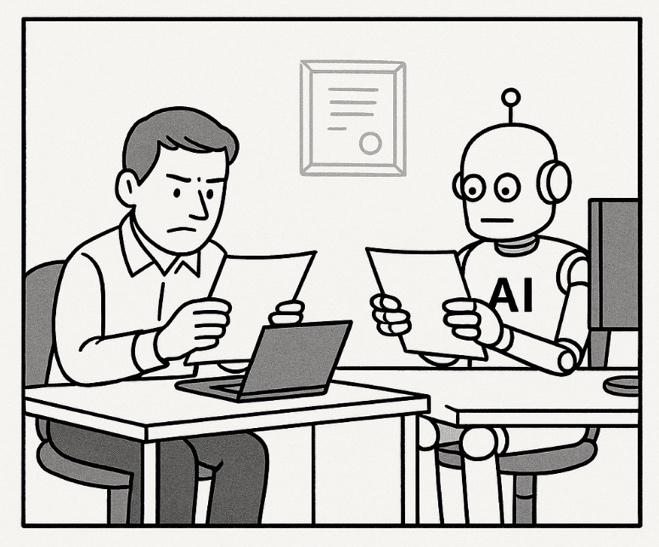
In design, we've seen this pattern forever. Every breakthrough creates its own bureaucracy. The GUI was supposed to make computing simple. It gave birth to windows, icons, folders, settings. The smartphone was supposed to collapse tools into one, it fragmented attention across a thousand. Now AI promises to eliminate drudgery, but the drudgery just moves up the ladder. You no longer spend time writing, you spend time judging what the machine wrote. You're not freed from thought, you're managing its overflow.
And that's the real danger of efficiency. It breeds taste atrophy.
When everything is instant, nothing requires judgment.
You stop choosing, you start approving. Approvals replace choices. The output might look clean, but the intuition fades.
It's the same reason every brand starts to sound the same. The same reason music feels algorithmic. The same reason you can predict the next five seconds of any corporate video before it happens. We've optimized the rhythm out of it.
Machines can replicate patterns, but they can't replicate friction, the little offbeat imperfections that make something human.
I've written before that rhythm is rebellion. The same truth applies here. Rhythm is intentional friction. It's what keeps art alive when everything else tries to smooth it out. Miles Davis once said, "It's not the notes you play, it's the notes you don't." That's design too. That's leadership.
But we're building systems that reward the opposite. Every platform wants more, more engagement, more reach, more iteration. We've built cultures where stillness reads as failure. Even the language betrays us. "Scaling," "shipping," "velocity." Nobody wants to build something meaningful, they want to optimize something measurable. The problem is that meaning doesn't scale. It deepens. It matures. It asks for time, exactly the thing we're trying to save.
The first time I held a Supernote in my hand, I realized how starved we've become for friction. The pen drags slightly, resisting the impulse to rush. That drag is the point, it slows you down just enough to think, to feel your own hand again. The same way a Leica's shutter or a mechanical keyboard reminds you that craft still matters. That speed isn't the same thing as progress.
Our industry has built an entire mythology around optimization. Every update, every keynote, every pitch promises more. More intelligence, more automation, more alignment. But I keep coming back to the same question. More for what? What are we actually freeing ourselves for? Freedom without direction just accelerates the drift.
The irony of modern design is that all our precision has made us vague.
We've learned how to remove resistance, but not how to restore meaning. We've built tools that amplify output but erode originality. Progress is supposed to expand choice, instead it collapses it into the illusion of convenience.
The paradox of progress is that every shortcut eventually lengthens the journey. The easier something becomes, the more we demand of it. We create systems to manage systems, optimize the optimizations and measure the measurements. It's no wonder everyone feels exhausted. It's not just that we're moving too fast, it's that we no longer know what pace feels natural. The design of our tools has changed the rhythm of our thought. We think in bursts, speak in fragments, create in loops. Efficiency has rewritten our sense of proportion and proportion is the foundation of taste.
Taste is what separates craft and art from content. It takes patience, friction and a willingness to decide what not to do. Efficiency collapses those boundaries. It equalizes everything. Urgency becomes default. Output becomes identity. The dashboards glow, the analytics hum and somehow everyone feels smaller inside their own work. Capacity goes up. Consequence goes down.
We've reached the point where tools designed to connect us have made solitude feel like defiance. Every minute of silence feels inefficient. Every break feels like guilt. The great irony is that the more efficient we become, the less effective we feel. We can do more but mean less.
The next phase of design, the one I actually believe in, isn't about smarter tools. It's about gentler systems. Interfaces that return ownership of pace. Products that reward patience. AI that augments judgment instead of replacing it. We don't need an arms race of features. We need an architecture of restraint.
Efficiency gave us motion. What we need next is proportion, the kind that restores rhythm between speed and sense.
The kind that remembers friction isn't the enemy, it's the evidence of care.
When I look at the future of design, I don't see perfection. I see possibility. A quiet return to systems that breathe. To craft that slows the hand down enough for the heart to catch up. The goal was never to go faster. It was to make speed feel like purpose.# Document 2: What We Scale


